 ESP
 ENG
 DEU
 ITA
 NLD
 POL
 SWE
 FRA
 CES
The Grape Harvest in Spain: Wine Traditions and Festivals

The grape harvest in Spain is much more than simply picking grapes: it represents the moment when vineyards, wineries and towns celebrate the outcome of a year of work in the countryside. Between late August and early November, depending on the region and weather conditions, the harvest gives way to rituals, tastings, gastronomy and popular celebrations connected with wine culture.
From Andalusia to Castilla-La Mancha and Rioja Alavesa, grape-harvest festivals reveal different ways of experiencing the same tradition. Freshly picked grapes, the first must, symbolic grape treading and local products become the main features of gatherings that bring together agriculture, heritage and wine tourism.
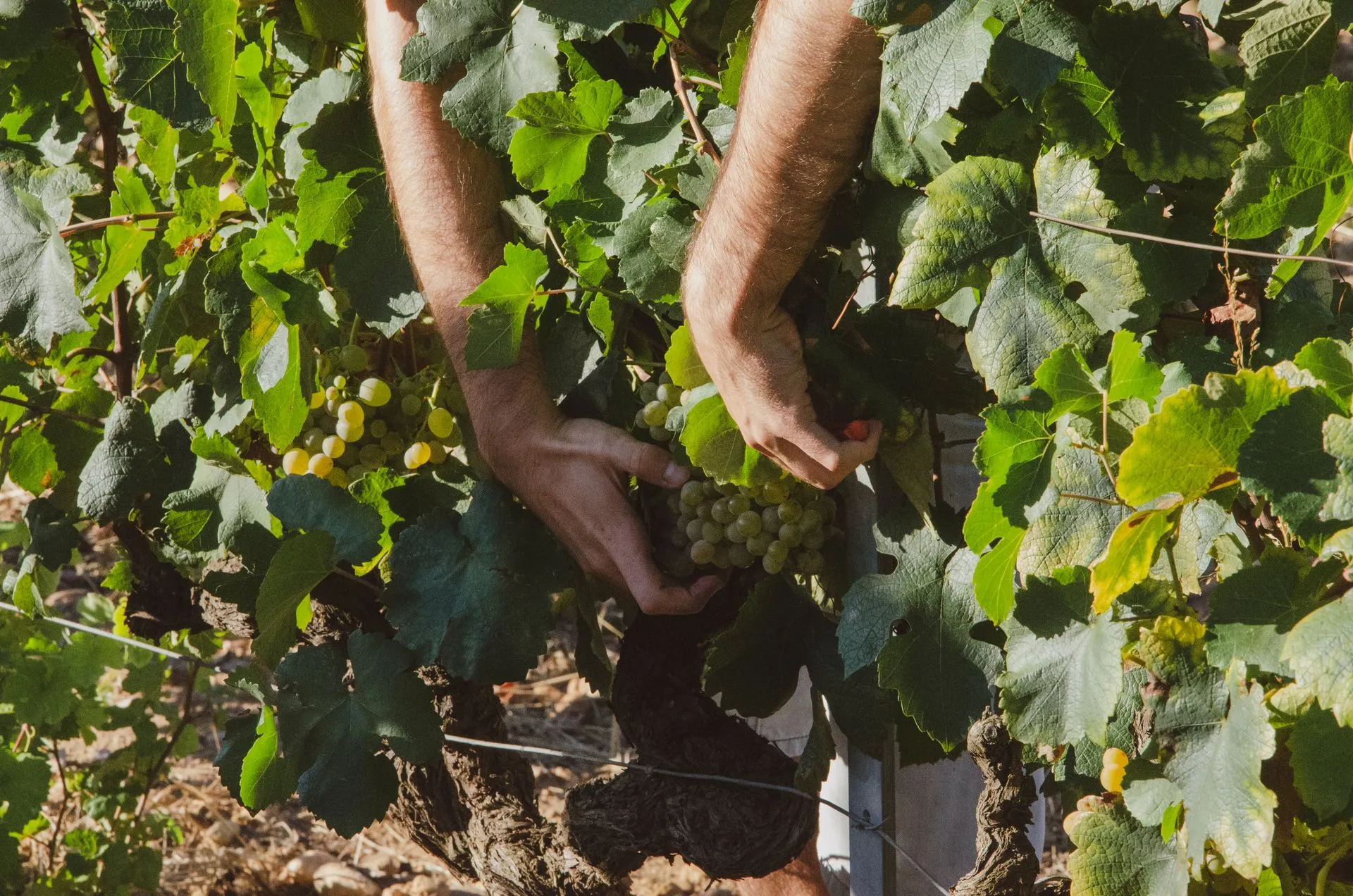 Photo by Corentin Henry, pixels.com
What Is the Grape Harvest and Why Does It Matter?
The grape harvest is the gathering of grapes, mainly intended for wine production. Choosing the right time to harvest is crucial: the ripeness of the grapes affects the wine’s later characteristics, so the calendar depends on the climate, the grape variety being grown and the specific features of each area. In Spain, September and October have traditionally been the key harvest months.
However, the harvest should not be understood only as an agricultural task. In many wine-producing towns, it also marks the beginning of a social and cultural season. During this period, activities are organised to introduce visitors to the world of wine: vineyard visits, winery tours, tastings, wine sampling, music, gastronomy and traditional events.
The celebration also highlights the role of winegrowers and winemakers. Behind every glass of wine is an annual cycle of work that starts long before the harvest: caring for the vines, monitoring grape ripeness and preparing for the season. For this reason, wine festivals serve as a collective recognition of those who keep this landscape and expertise alive.
Grape Treading
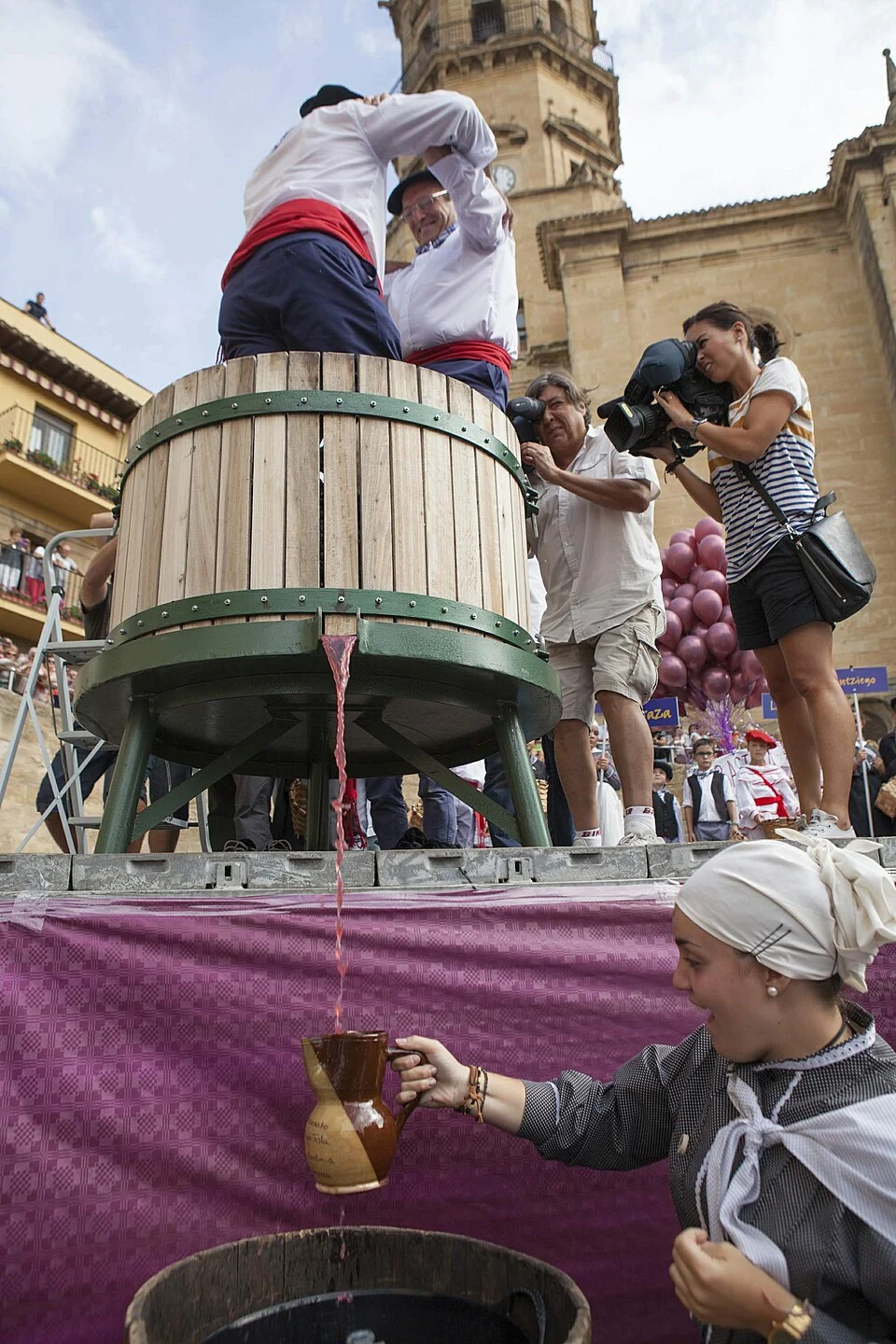
One of the best-known symbols of the grape harvest is grape treading. This public and ceremonial act recreates the traditional extraction of the first must by crushing grapes in a wine press. Today, it mainly has cultural and symbolic value: it helps preserve historical techniques and turns the start of the harvest into a shared event.
In Jerez de la Frontera, the Grape Treading Ceremony officially opens the Grape Harvest Festival. The City Council explains that the ceremony recalls the artisanal method of obtaining the first must and highlights the historic relationship between the city, the vineyard and Jerez wine.
In Valdepeñas, traditional grape treading also plays a central role. It is accompanied by the offering of the first must to the Virgin of Consolation, a gesture that connects the celebration of the harvest with the religious and community dimension of local festivities.
These rituals are not intended to replace modern winemaking processes, but rather to preserve a recognisable image of agricultural tradition. Seeing the wine press, the grapes and the first must helps us understand that wine does not begin in the bottle, but in the vineyard.
“Fiesta de la Vendimia en Labastida (Rioja Alavesa)” by Irekia - Gobierno Abierto, Wikimedia Commons, Creative Commons Attribution 2.0
Wine Festivals in Spain
Spain has numerous celebrations related to the grape harvest. Each one expresses a different local identity, although all of them share the aim of highlighting vineyards, wine and the social life built around them.
Jerez de la Frontera: Wine, Flamenco and Gastronomy
The Jerez Grape Harvest Festival has been declared an event of International Tourist Interest. Every September, the city celebrates the birth of new wines and the importance of wine culture to its identity.
The programme combines tradition, gastronomy and cultural activities. In addition to the Grape Treading Ceremony, it includes tastings and food-pairing experiences that link Jerez wines with local cuisine. The programme also features flamenco, live music, vineyard visits and wine-tourism experiences.
In 2026, the festival is scheduled to take place from 29 August to 13 September. Although dates and activities may change from year to year, its central aim remains the same: bringing the grape harvest closer to residents and visitors through a celebration that connects wine, the city and cultural heritage.
Rioja Alavesa: A Festival That Travels Around the Region
The Rioja Alavesa Grape Harvest Festival is itinerant. The celebration began three decades ago with the aim of representing the whole region while also showcasing the diversity of its towns, landscapes and traditions.
Wine and vineyards act as common elements among the participating localities. However, each edition develops its own personality according to the host town. In 2026, Kripan, in Rioja Alavesa, will host the 31st edition of the Grape Harvest Festival on 13 September.
This format makes it possible to understand the harvest not only through one particular town, but from the perspective of an entire wine-growing territory. The festival invites visitors to discover that vineyard landscapes, local villages and work connected with wine form a shared identity.
Valdepeñas: Manchegan Culture Around Wine
The Wine and Grape Harvest Festivals of Valdepeñas, declared an event of National Tourist Interest, are usually held during the first week of September. The town experiences these dates as a collective occasion that recognises the efforts of winegrowers and winemakers.
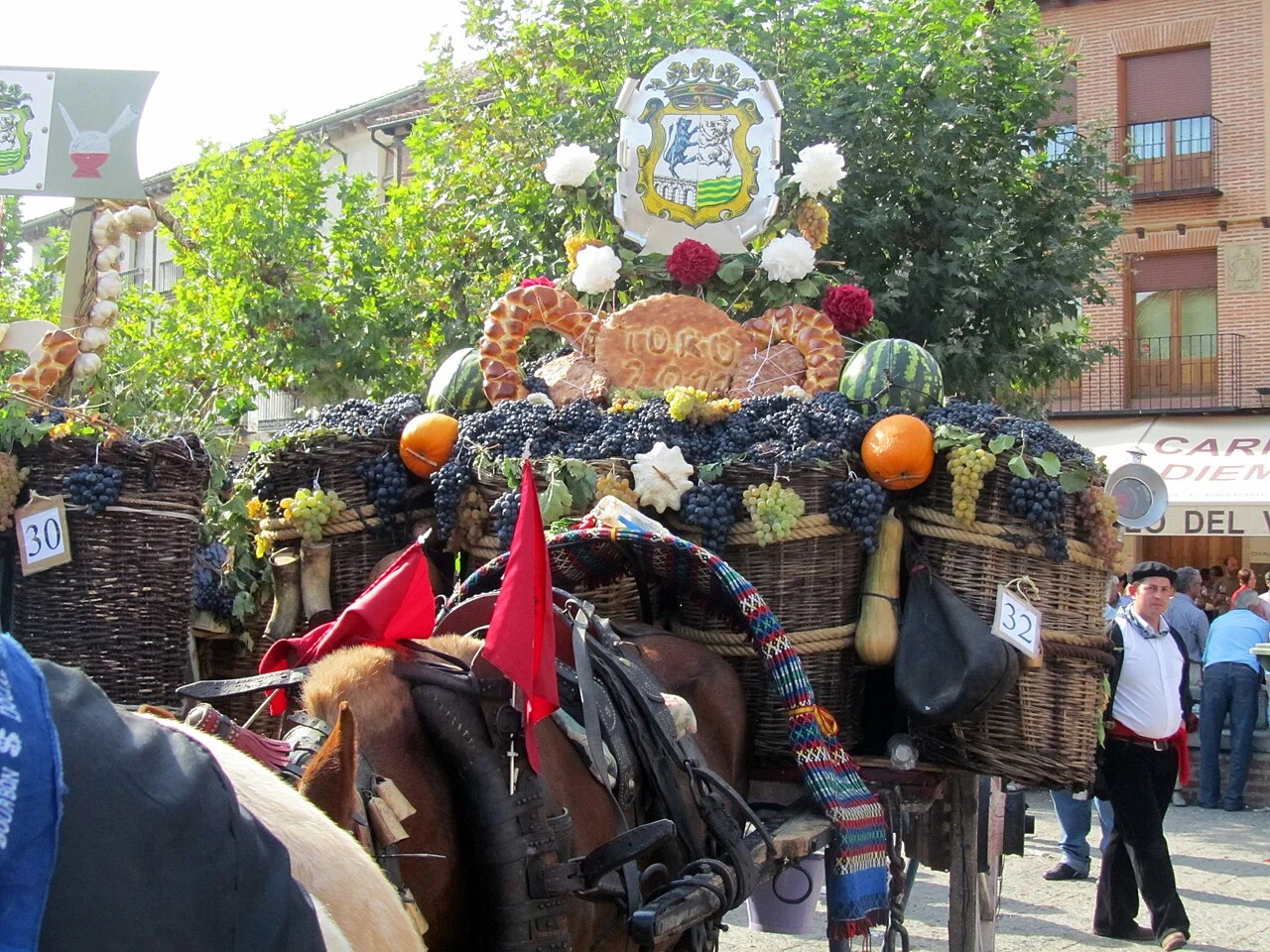
The programme brings together traditional events, such as grape treading and the offering of the first must, as well as concerts, competitions, parades, tastings, wine sampling and gastronomic activities. Manchegan culture and wines from the Valdepeñas Designation of Origin are present throughout the celebration.
Beyond the festival itself, the event helps explain the importance of wine as part of the local economy, gastronomy and collective memory. For visitors, it is an opportunity to discover the area not only through consuming its products, but also through the people and customs that surround them.
“Fiesta de la Vendimia en Toro - cestas y carros 06” by Rastrojo, Wikimedia Commons, Creative Commons Attribution-Share Alike 4.0
How to Experience the Harvest Responsibly
Visiting a grape-harvest festival can be a very enriching cultural experience, but it is important to respect the rural environment and the rules of each event. The grape harvest is a real working season, so not all wineries and vineyards are open to the public under the same conditions.
Always check the official programme of the town council, tourist office or event organiser before travelling.
Book winery visits, tastings and activities with limited capacity in advance.
Follow safety instructions in vineyards, wine presses and production facilities.
Prioritise public transport, organised groups or a designated driver who does not consume alcohol.
Remember that the value of these festivals lies not only in the wine, but also in the landscape, gastronomy, music and community that make them possible.
The grape harvest in Spain shows how an agricultural activity can become living heritage. Grape picking gives rise to celebrations where traditional techniques, local cuisine, music, popular religious practices and cultural tourism come together. In Jerez, Rioja Alavesa and Valdepeñas, wine becomes a way of telling the story and identity of each territory.
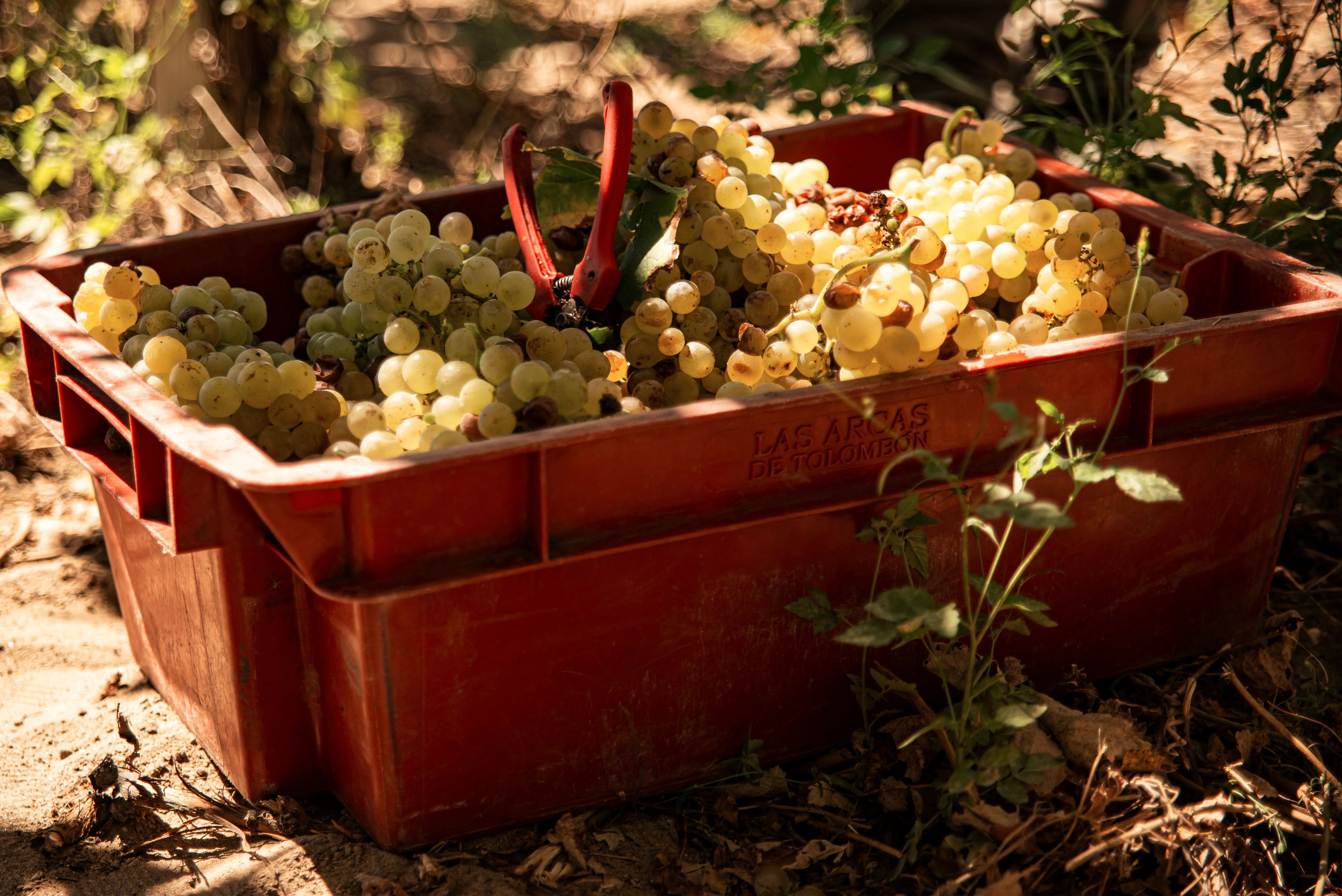
Photo by Gonzalo Acuña, pixels.com
Frequently Asked Questions
When does the grape harvest take place in Spain?
The date varies depending on the region, climate and ripeness of the grapes. In general, the Spanish grape harvest takes place between late August and early November, although September and October are the most common months. The decision to harvest depends on the grapes reaching an appropriate level of ripeness.
What does grape treading mean?
Grape treading is a traditional practice that recreates the artisanal extraction of the first must by crushing grapes in a wine press. Today, it usually has symbolic and cultural value. At festivals such as those in Jerez and Valdepeñas, it publicly marks the beginning of the grape-harvest celebrations.
Which grape-harvest festivals can be visited in Spain?
Notable celebrations include the Jerez de la Frontera Grape Harvest Festival, the Rioja Alavesa Grape Harvest Festival and the Wine and Grape Harvest Festivals of Valdepeñas. Their programmes combine traditional events, wine, gastronomy, music, culture and wine-tourism activities.
Why are grape-harvest festivals important?
These festivals make the work of winegrowers and winemakers more visible, preserve traditions and promote the wine culture of each territory. They also support cultural and gastronomic tourism by bringing visitors and local residents closer to vineyards, wineries, local products and regional customs.
Where can I find updated dates and programmes?
The most reliable option is to check the official websites of local councils, tourism organisations or event organisers. Dates, schedules, activities and booking systems may change each year. For example, Jerez and Rioja Alavesa publish specific information for each edition through their official channels.